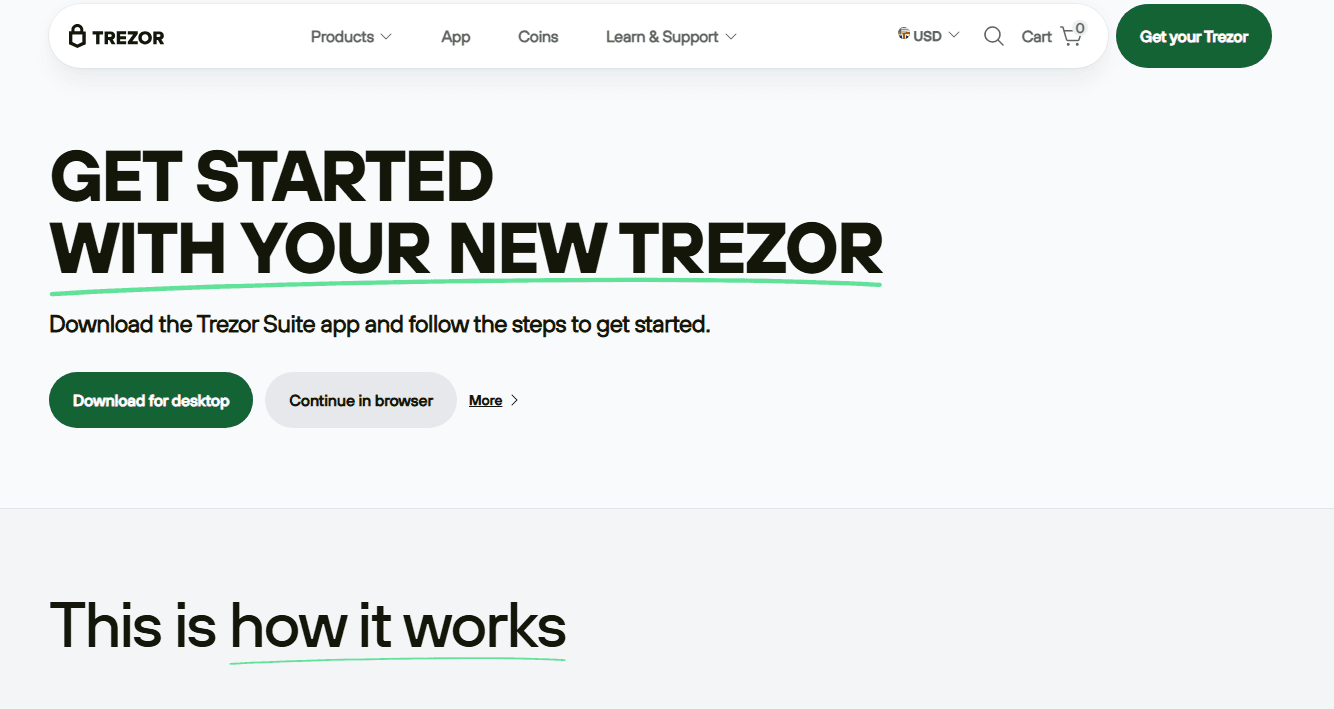
Trezor.io/Start: Complete Guide to Setting Up Your Trezor Hardware Wallet
Trezor.io/Start is the official onboarding process for Trezor hardware wallets. This process guides users through initializing their device, securing private keys, and managing cryptocurrencies safely. By following the steps provided by Trezor.io/Start, users ensure that their assets are protected from online threats while maintaining full control over their digital wealth.
What Is Trezor.io/Start?
Trezor.io/Start is the first step in using a Trezor hardware wallet. It is a guided setup process that helps users configure their device securely. During this setup, users create essential security credentials such as a PIN and recovery seed, which protect their assets from unauthorized access.
The primary goal of Trezor.io/Start is to provide a secure, reliable, and user-friendly introduction to self-custody of cryptocurrency. Unlike software wallets, Trezor hardware wallets keep private keys offline, reducing the risk of theft or hacking.
Why Trezor.io/Start Is Essential
The initial setup of a hardware wallet is the most critical stage in securing cryptocurrency. Trezor.io/Start ensures that users follow best practices from the beginning. Skipping or misconfiguring this process can expose assets to serious security risks.
By completing Trezor.io/Start correctly, users establish a secure foundation for long-term crypto management, including protection against malware, phishing, and unauthorized access.
Preparing for Trezor.io/Start
Before starting the setup process, users should ensure they are in a private, secure environment. The setup will generate sensitive information that must not be viewed by others.
Users should have the following ready:
The Trezor hardware wallet
A computer or mobile device compatible with Trezor Bridge or Trezor Suite
A secure location to store the recovery seed offline
Preparation is key to completing the setup safely and efficiently.
Powering On and Initializing the Device
The first step in Trezor.io/Start is powering on the Trezor device. Users navigate the device using its buttons and display screen. During initialization, the device generates cryptographic keys securely within the hardware wallet.
Initializing a new wallet ensures that private keys are never exposed to external systems or the internet, providing the foundation for secure asset storage.
Creating a Secure PIN Code
During Trezor.io/Start, users are prompted to set a PIN code. This PIN is required every time the device is unlocked and serves as the first line of defense against unauthorized access.
The PIN is entered directly on the device, ensuring that it is not exposed to connected computers or mobile devices. If the wrong PIN is entered multiple times, the device automatically locks, protecting the stored assets.
Understanding the Recovery Seed
As part of Trezor.io/Start, the device generates a recovery seed—a sequence of 12, 18, or 24 words depending on the device configuration. This seed is the most important backup for the wallet.
The recovery seed allows users to restore their cryptocurrency on a new Trezor device if the original is lost, damaged, or stolen. It represents full access to the funds stored on the wallet.
Best Practices for Storing the Recovery Seed
Trezor.io/Start emphasizes the critical importance of proper recovery seed storage. The seed must be written down clearly and stored offline in a secure location.
Users are advised never to store the seed digitally, take photographs of it, or share it with anyone. Anyone with access to the recovery seed can fully control the wallet and its assets.
Verifying the Recovery Seed
To ensure accuracy, Trezor.io/Start includes a recovery seed verification step. Users are prompted to confirm specific words from the seed in the correct order on the device.
Verification ensures that the recovery seed has been recorded correctly. Without a verified seed, users may not be able to recover their funds, making this step essential for long-term security.
Installing Trezor Suite
After completing the initial setup, Trezor.io/Start guides users to install Trezor Suite, the companion application for managing accounts and assets.
Trezor Suite allows users to:
View balances
Send and receive cryptocurrency
Manage multiple accounts
Track portfolio performance
Importantly, all private keys remain on the Trezor device; the application serves only as a management interface.
Adding Cryptocurrency Accounts
Once Trezor Suite is installed, users can add supported cryptocurrency accounts. Each account is linked securely to the Trezor device, ensuring private keys remain protected.
Trezor.io/Start explains that adding accounts does not compromise security; it simply allows interaction with blockchain networks safely.
Receiving Cryptocurrency Safely
Trezor.io/Start ensures users know how to receive funds securely. Wallet addresses are generated within Trezor Suite and verified on the device screen.
Verifying addresses on the device helps prevent errors or malware from redirecting funds to an incorrect address.
Sending Cryptocurrency with Security
Sending cryptocurrency is a secure process with Trezor hardware wallets. Transaction details, including destination address and amount, are displayed on the device for manual confirmation.
Users must approve each transaction physically on the device, preventing unauthorized transfers even if the computer or mobile device is compromised.
Verifying Device Authenticity
Trezor.io/Start includes steps to verify the authenticity of the device. Authenticity verification ensures the wallet is genuine and running trusted firmware.
This step is critical for preventing counterfeit devices, which could potentially compromise private keys and funds.
Desktop and Mobile Compatibility
Trezor.io/Start supports both desktop and mobile environments. Users can complete setup on a computer or through a mobile device.
Regardless of platform, all critical actions, including PIN entry and transaction approval, occur directly on the device to maintain strong security standards.
Common Mistakes to Avoid During Setup
Trezor.io/Start helps users avoid common mistakes such as:
Choosing weak or easily guessable PINs
Skipping recovery seed verification
Storing the recovery seed digitally
Rushing through setup without reading instructions
Following each step carefully ensures the wallet is fully secure from the start.
Maintaining Security After Setup
Completing Trezor.io/Start is only the first step in safe cryptocurrency management. Users should:
Keep Trezor firmware up to date
Update Trezor Suite regularly
Protect the recovery seed and device physically
Verify every transaction before confirming
These practices maintain security and ensure long-term protection of assets.
Benefits of Completing Trezor.io/Start Correctly
By completing Trezor.io/Start properly, users gain:
Full ownership and control of cryptocurrency
Protection against hacking and phishing
Privacy, as no personal data is required
Confidence in secure, hardware-based asset management
Trezor.io/Start lays the foundation for independent, safe cryptocurrency management.
Suitable for Beginners and Advanced Users
Trezor.io/Start is designed to be user-friendly for beginners while meeting the high security expectations of advanced users. Clear instructions, guided verification, and device-based security ensure that all users benefit from the same high level of protection.
Conclusion
Trezor.io/Start is the essential first step for anyone using a Trezor hardware wallet. It guides users through secure device initialization, PIN creation, recovery seed setup, and account management.
By following Trezor.io/Start carefully, users establish a secure, private, and reliable system for managing cryptocurrency. This process ensures long-term protection, confidence, and complete control over digital assets.